The Tea Trolley at 3am: A Night with Newcastle’s Hospital Chaplains
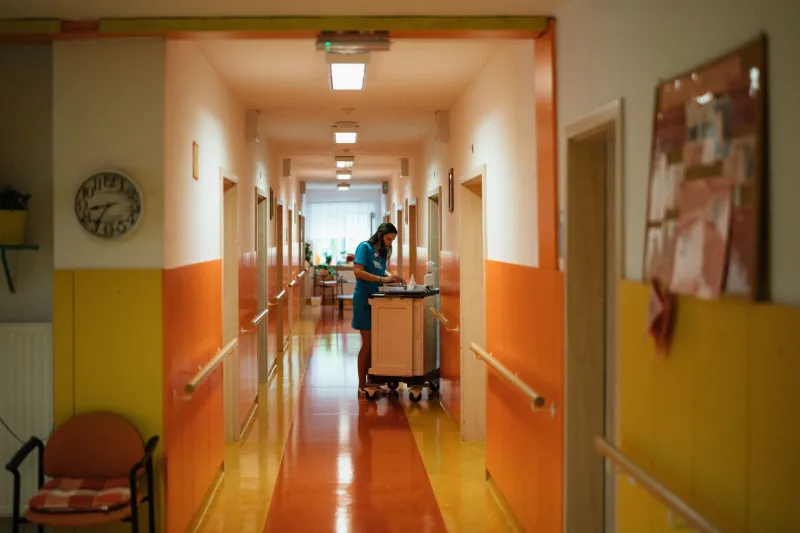
At 3am, a Newcastle hospital corridor has its own weather. The lights are low, the lifts seem to sigh, and the only footsteps belong to staff who have learned to move quietly. It is here, between the ward and the vending machine, that the hospital chaplaincy team does some of its most important work.
You might expect a Bible, a prayer book, perhaps a well-rehearsed speech about hope. What you actually notice is a pager, a lanyard, a notebook, a pen that works, hand gel, a few tea bags and a small stash of biscuits. The chaplain on duty is not arriving to fix anyone. They are arriving to be with them.
What a chaplain carries
Hospital chaplaincy is often misunderstood as a service for the very religious, or the very dying. In reality, it is for anyone in the building: patients, families, cleaners, porters, nurses, doctors, and the person who has been sitting in the same plastic chair for eleven hours because leaving feels impossible.
The team works across faiths and none. A chaplain might pray with a patient, sit in silence with a family, contact a local imam, ring a parish priest, or simply make sure someone has a cup of tea and a phone charger. They carry a list of names, not a script. They also carry the awareness that a hospital at night is not a single place. It is dozens of small worlds, each with its own worries.
One chaplain, who asked not to be named, described the job as ‘mostly listening and occasionally making tea’. She has been paged at 3am for many reasons: a patient who cannot sleep, a family waiting for news, a staff member who has had a difficult shift, a death that has left a ward quiet. ‘You do not need the right words,’ she said. ‘You need to turn up and not be frightened by the silence.’
The conversation that only happens at 3am
Night conversations have a different texture. There is less to distract you. The daytime bustle has gone, the visitors have left, and the ward has that strange, suspended feeling of a place where time is being marked by observations and medication rounds rather than clocks.
On one corridor, a man in a dressing gown was sitting by the window. He did not want prayer. He did not want a leaflet. He wanted someone to sit with him while he thought about his wife, who was asleep in another ward and not expected to recover. The chaplain made two cups of tea, asked his wife’s name, and listened. They talked about how they met at a dance in Byker, about the seaside, about the fact that he had never learned to cook. Nothing was solved. But he was not alone with it.
That is the quiet theology of hospital chaplaincy. Faith is not offered as a lecture. It is offered as presence. Sometimes it looks like a hand held. Sometimes it looks like helping a family find the right corridor. Sometimes it looks like standing outside a cubicle while someone cries and then asking if they would like the curtain pulled a little further.
Staff are on the list too
It is not only patients who need that presence. Hospital staff work under pressure that most of us only glimpse when we are inside the building ourselves. A nurse who has just come out of a difficult resuscitation may not want to talk to a manager. They might want to talk to someone who is not going to write it in their file.
Chaplains support staff quietly: a conversation in a stairwell, a pause in a chapel, a reminder that they are allowed to be human. They do not replace counselling or occupational health. They simply offer a space where someone can say ‘that was hard’ without having to explain why.
Volunteer visitors are part of this too. They come from local churches and the wider community, bringing conversation and company to patients who might otherwise see no one but staff. They are trained, checked and supported, and they are not there to preach. They are there to be a friendly face on a long day.
Faith without a sermon
On the ward, the chaplain’s badge is usually enough. People recognise that here is someone who is not rushing to the next clinical task. That can be a relief. A patient may say, ‘I’m not religious, but…’ and the chaplain will nod. The ‘but’ is usually the important part.
The team also works with people of different faiths, and with those who would describe themselves as spiritual but not religious. They can arrange for a priest, rabbi, imam or other faith leader to visit. They can find a quiet room. They can sit with someone who is frightened and does not know what they believe anymore.
Hope, in this setting, is not always cheerful. It is often more modest: the hope that someone will come, that the next shift will be kinder, that a family will be able to say what needs saying. It is the hope of a city that looks after its own, even at 3am.
How to ask for support — or offer it
If you or someone you love would like a chaplaincy visit, you do not need to be religious, and you do not need the right words. Tell a member of ward staff, or ask the hospital switchboard to contact the chaplaincy team. Family members can also ask on someone’s behalf. The service is confidential and open to people of all faiths and none.
If you are interested in volunteering as a visitor, the hospital chaplaincy team and local parish offices can point you towards current opportunities. Volunteers are trained and supported, and the commitment is usually a few hours a week or month. It is not glamorous work. It is tea, listening, and showing up.
As the sky began to lighten over Tyneside, the chaplain checked her pager, made a note, and headed back towards the ward. The tea trolley was still there. The corridor was still quiet. And somewhere behind a curtain, someone who had been awake all night knew that they were not alone. That is what the church looks like at 3am: not a sermon, but a cup of tea and a hand held in the dark.