When Sunday Doesn't Stop: Faith, Rest and the People Who Keep Newcastle Running

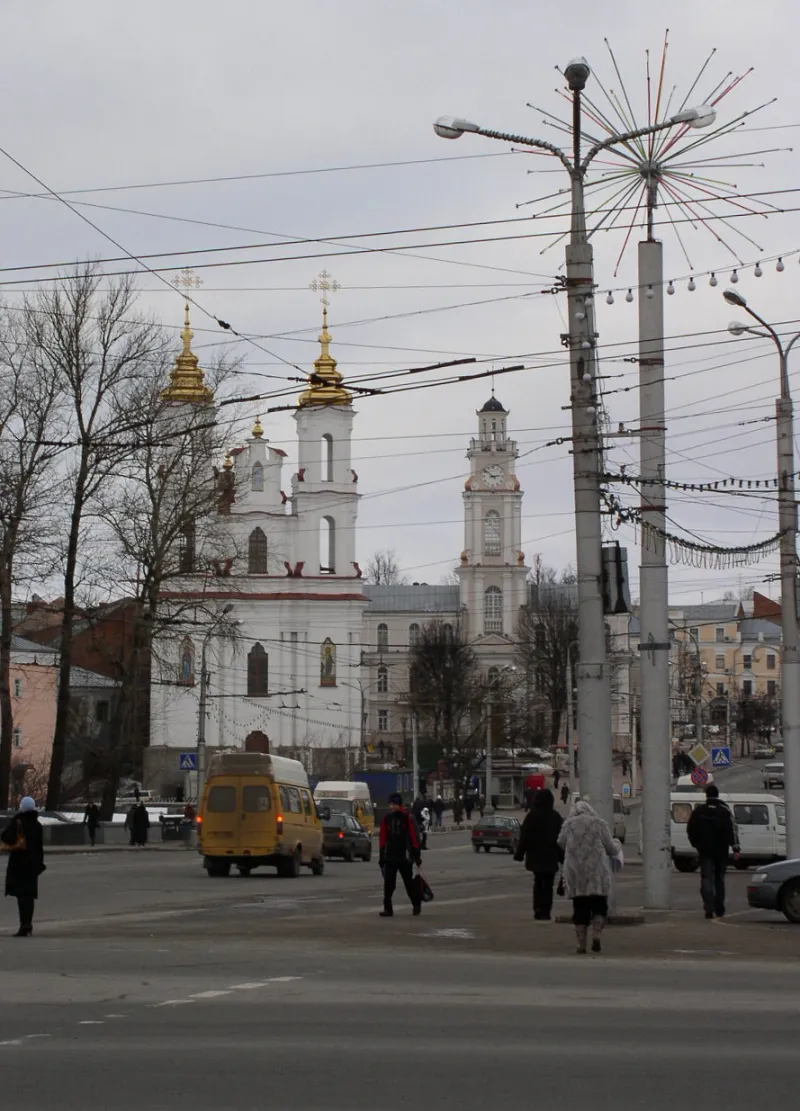
Photo: Ryo FUKAsawa, CC BY 2.0, via Wikimedia Commons
There is a version of Sunday that gets preached about and a version that actually happens. The preached one involves bells, a roast, a walk along the Quayside and an early night. The real one, for a sizeable chunk of Tyneside, involves a lanyard, a timetable and a 5.40am alarm.
We spoke to three people who work the city's Sundays: a nurse at the RVI, a bus driver on the Go North East network, and a café owner in the Grainger Market. All three asked to use first names only, which tells you something in itself. Their shifts are not romantic. But their answers were sharper than most sermons.
'Sunday is just Tuesday with more buses'
Denise has been nursing for nineteen years, the last eleven of them on a ward that runs a full weekend rota.
'I stopped calling it Sunday years ago,' she says. 'It's a date on the rota. If I'm on, I'm on. The ward doesn't get quieter because the rest of the city has decided to slow down.'
What she misses is not the service so much as the rhythm around it. 'I was brought up going to church. What I actually miss is the after bit. The standing about outside with a cup of tea, arguing about nothing. That's the part nobody puts on a livestream.'
Denise is blunt about what would help. 'A service at half seven in the evening is worth more to me than three at ten in the morning. And if a parish could manage a Wednesday evening, that would catch half the trust. Sunday is the one day I'm least likely to be free.'
'The 6.20 doesn't wait for anyone'
Michael drives buses and has done for eight years, mostly on the early Sunday runs: the quiet ones where the passengers are care workers going on shift, clubbers going home, and the occasional person in a suit who has clearly had a much better Saturday than he did.
'Sunday driving is honestly my favourite,' he says. 'The city looks like it's been left somewhere and forgotten. You get regulars. There's a woman who gets on at the same stop every week and I know if she's not there by twenty past, something's wrong.'
He is not a regular churchgoer, but he is clear that something is being asked of him on a Sunday morning. 'I don't know what you'd call it. It's not praying. But you're paying attention to people. You clock who's on, who's not. That feels like the same thing, just without the building.'
His practical request is small and specific. 'If a church is doing something for shift workers, put the time on the front of the building, not on a website I'm never going to look at at four in the morning. I'm not going to hunt for it.'
'I open at eight and I'm still here at four'
Roisin runs a café stall in the Grainger Market. Sunday trading has been patchy for years, she says, but the market's weekend rhythm has quietly become part of her week.
'Sunday used to be the dead day and now it's families and people off the trains,' she says. 'I love it. But it's six days of standing and one day of paperwork, so I'd be lying if I said I was resting.'
Her faith, she says, has been kept alive less by services than by the people who come through the market. 'I do the food bank run on a Tuesday. The ones who help me are the ones I'd have sat next to in a pew anyway. It's just a different room.'
She is quietly critical of the assumption that Sunday is available for everybody. 'There's a lot of church stuff that assumes you have a Sunday, and a car, and a spare evening. Half my customers don't have any of that. Neither do I.'
What the churches get right
There is real good work happening. Hospital chaplaincy teams, which operate across wards and faiths and, crucially, on nights and weekends. The growth of short midweek services and evening gatherings. Parish halls that open for a warm room and a kettle when the alternative is another afternoon alone.
The pattern in all three conversations was the same: the things that help shift workers are never grand. They are a time that fits, a door that is actually open, and somebody who notices when you are not there.
What we keep getting wrong
The assumption, mostly. We plan for a congregation of people with a free Sunday and a car, and then wonder where everyone has gone. If a parish's whole life happens between ten and eleven on a Sunday morning, it has effectively excluded paramedics, care workers, chefs, cleaners, security staff, bus drivers, midwives and anyone on a zero-hours contract. That is not a small statistical gap. That is most of the working city.
And there is a comfortable story we tell ourselves about rest. That it is a reward for the productive, a treat for the well-organised, a personal lifestyle choice. Read the stories of the nurses and drivers and market traders who keep Tyneside moving through the weekend, and it starts to look a lot more like a right that is unevenly distributed.
Is rest a luxury or a right?
Opinionated answer: a right, and one that faith communities should be advocating for in public, not merely modelling in private. That means backing workers who say no to Sunday contracts, and it means not quietly resenting them when they are not in a pew.
Rest, in the old language, is a commandment, not a hobby. Anyone who cannot take it because the rota says otherwise deserves something better than a well-meaning church that only ever meets on the one morning they are asleep.
Five things a parish could do this month
- Move one service into the evening, even if only once a month, and keep it genuinely short.
- Put every time on the outside noticeboard, in letters big enough to read from a bus.
- Ask three people on shift work what would actually help, then believe them.
- Offer a Sunday afternoon warm space with no expectation of attendance at anything.
- Make a rota of people willing to ring or message a shift worker once a week. It sounds trivial. It is not.
The Sunday shift will keep happening, whatever the rest of us do. The only question is whether the church is in the building when the shift ends. If you are a shift worker in Newcastle or Gateshead and want to talk about what would help, our door is open, and so is the kettle.