A Wrap, a Whisper and a Name: Following Tyneside’s Prayer Shawls From the Back Room to the Bedside
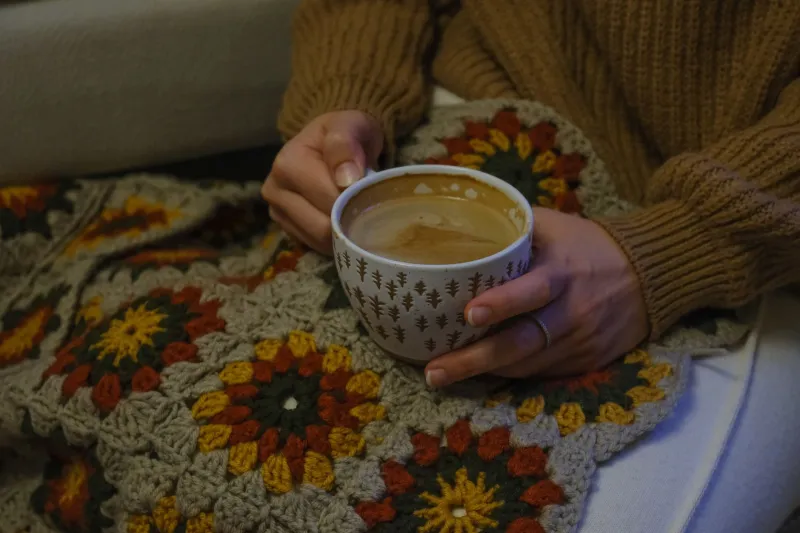
The tea urn is on before the chairs are out. By half past ten there are nine of them round the tables — two card tables pushed together, a biscuit tin doing the rounds, and a small mountain of wool that looks like something rescued from a jumble sale and sorted by someone with strong opinions.
This is a Thursday morning in a church hall in Heaton, a few streets back from Chillingham Road, and this is the knitting circle that makes prayer shawls. They are not a guild, they are not a society, and they will tell you firmly that they are not a craft club. They are a group of people who sit together, knit squares of garter stitch, drink a lot of tea, and quietly get on with the business of looking after strangers.
What a prayer shawl actually is
If you have not come across the idea, it is simple enough. A shawl — usually a rectangle about the size of a generous scarf — is knitted, sometimes prayed over, sometimes blessed, and then given away. It goes to a hospital ward, a hospice, a bereavement visit, a baptism, a refuge, a new flat. It is not a magic garment and nobody here will pretend it is. It is a signal: somebody thought about you, for hours, before they ever met you.
The knitters are wary of making it sound sentimental. “People say it’s the thought that counts,” says Margaret, who has been coming for six years and is currently on her fourth shawl of the autumn. “Well, the thought takes about twenty hours. That’s the point. A card takes five minutes. This takes a fortnight of an ordinary life.”
Around the table, the shawls are at different stages. One is a soft grey, almost finished. One is a deep plum, ribbed, and its maker is quietly unravelling a row she does not like. One is a bright, slightly shouty turquoise that has been the subject of much discussion and is now officially “for the youth worker”. The wool comes from donations — some from clearance bins, some from the back of cupboards, some from families clearing out a relative’s stash. There is a running joke that somewhere in Tyneside there is a warehouse of beige DK that will outlast us all.
The route out of the door
What surprised me most is how far these things travel. The circle keeps a rough note of where each shawl goes — not a ledger, more a running list on the back of an envelope — and the destinations are more varied than you might expect.
Some go to the wards at the RVI and the Freeman, passed on by hospital chaplains who keep a stash in a cupboard and hand them out when a person is frightened, cold or alone. Some go to a hospice in Gosforth, where they are used less as blankets and more as something to hold. Some go out with bereavement visitors, who take one when they call on a household in the first raw weeks after a death. Some are given at baptisms, wrapped around a baby who will grow out of it in months.
And some leave the country. There is a shawl in a flat in Byker that arrived with a family who came to Newcastle under a resettlement scheme, and another that went into a coat pocket and travelled to a care home in Northumberland. One, Margaret tells me, ended up in the back of a police car on a cold night, given to a teenager who had run away from home. “The officer asked if we had anything warm. We had a shawl in the boot of the car. You don’t ask questions after that.”
Why handmade still matters
The knitters are not naive about this. They know a shop-bought blanket would be warmer, cheaper and quicker. They know that a shawl will not fix a diagnosis or pay a bill. What it does is different, and it is worth being precise about.
A handmade thing carries evidence of time. You can see where someone changed their tension, where a stitch went slightly wrong, where the wool was joined. It says: this was made by a person, slowly, without knowing who you are. In a hospital bed, that can land in a way a card cannot. Several of the group have had shawls returned to them years later, washed and folded, with a note. “You don’t get that with a bunch of flowers,” says Anne, who is teaching a new member to cast on at the far end of the table.
There is also the slightly awkward matter of faith. The group is attached to a church, and some of the shawls are blessed at a Sunday service before they go out. But the circle is clear that nobody is being recruited. The shawls go to people of any faith or none, and the only rule is that they go to someone who could do with one. “We aren’t handing out leaflets,” says Margaret. “We’re handing out warmth.”
The circle looks after itself, too
What becomes obvious over the morning is that the knitting is only half of it. The circle is a place where people who might otherwise be on their own on a Thursday come and sit. There is a widower who learned to knit at seventy-eight because the evenings were too long. There is a woman who comes mainly for the conversation and has produced exactly one shawl in two years, which she insists is “a learning shawl”. There is a teenager from a local school who turned up on a work experience placement and stayed.
They gossip, they take the mickey, they complain about the price of wool and the state of the bus service on Chillingham Road. They also, quietly, notice when someone has not been for a fortnight, and someone rings.
How it gets out there
If you would like to be involved, the group asks very little. You do not need to be a good knitter — a plain garter stitch shawl is the standard, and there are people here who will teach you. You do not need to be a churchgoer. Wool donations are always welcome, especially anything soft and machine-washable, because the shawls are meant to be used, not preserved.
What they cannot always keep up with is demand. The hospital chaplaincies and the bereavement teams ask constantly, and the pile by the door is never as big as they would like. So if you have needles in a drawer and a spare hour on a Thursday, the urn will be on. The biscuits, I am told, are usually decent.
At the end of the morning, a grey shawl is folded, wrapped in tissue and labelled with a first name and a ward. It will be in a hospital by the afternoon. The woman who knitted it will probably never know who received it, and she seems entirely comfortable with that. “That’s not the deal,” she says, packing away her needles. “The deal is that somebody gets it.”