The Long Climb to Noon: Inside the Quiet Ritual That Keeps a Tyneside Clock Honest
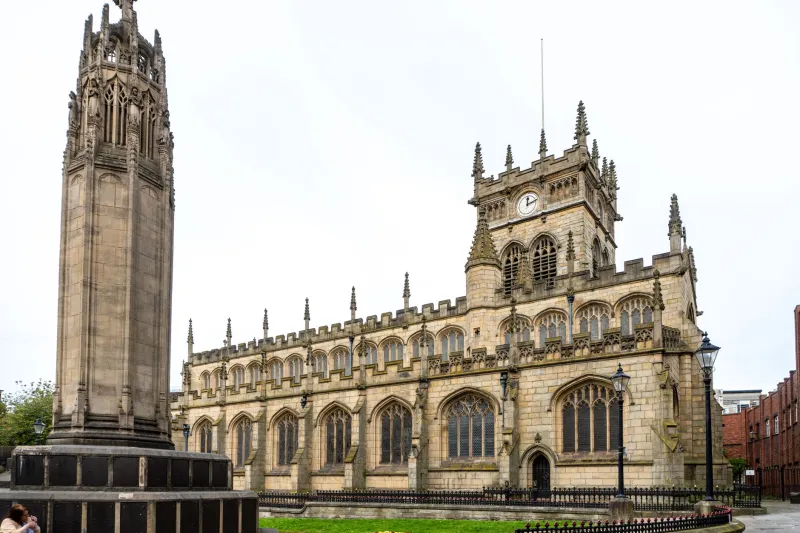
There is a particular kind of quiet above a church. Not silence exactly — the city is still out there, buses groaning up the hill, a Metro rattling somewhere beneath the streets — but a muffled, stone-thick quiet that makes the sound of your own coat seem rude. On a grey Tuesday in November, I followed a volunteer up a spiral staircase in one of Tyneside’s older places of worship to do something that has happened here, week after week, for well over a century: wind the clock.
The staircase was narrow enough that my shoulder kept introducing itself to the wall. The volunteer ahead of me — a retired fitter from Walker, softly spoken, wearing a fleece that had seen better decades — climbed it with the ease of someone who has made the journey several thousand times. “You get to know the steps,” he said. “Which ones creak, which ones don’t. It’s the same with the clock. You get to know its moods.”
A room above the noise
The clock room is not grand. It is dusty, practical and a bit cramped, with a wooden floor, a low ceiling and the sort of gentle clutter that accumulates wherever people have kept something running for a long time. There are old hand tools, a tin of oil, a laminated sheet of instructions and a pencil stub on a string. In the corner, the clock movement sits in its frame like a patient animal: brass, iron, wire and weight.
Most of us see only the dial from the pavement. We glance up, check the time, perhaps notice that the hands are a minute or two out, and carry on. But behind the face is a mechanism that needs attention — winding, oiling, checking, adjusting — and in many churches that attention still comes from a volunteer rather than a motor. Some clocks have been converted to automatic winding; others have not. Some have electric bells; others still rely on ropes and a strong pair of arms. The result is a quiet network of timekeepers across Newcastle and the wider Tyne and Wear area, people who hold a set of keys and a responsibility that is easy to overlook.
Weights, wires and a patient ear
My guide opened the clock case and showed me the weights that drive it. They are heavy, steady and utterly unglamorous. Winding them is not difficult, exactly, but it is deliberate. You are not just turning a handle; you are storing enough energy for the clock to keep going until the next visit. Miss a week and the clock stops. Miss two and the neighbourhood notices.
“It’s not a job you can rush,” he said, listening to the tick as if it were a conversation. “If it sounds wrong, it usually is. You don’t need to be an engineer. You need to be bothered.”
That word — bothered — stayed with me. Plenty of us can admire old buildings from a distance. Far fewer are willing to climb a cold staircase on a damp morning to keep one of them telling the truth. The volunteers I spoke to were not sentimental about it. They did not describe themselves as guardians of heritage. They talked about routine, about doing their bit, about the fact that somebody has to.
More than a dial
A church clock is a strange sort of public service. It belongs to the congregation, but it also belongs to everyone else: the parent checking whether they are late for the school gate, the delivery driver on a tight schedule, the dog walker who uses the chimes to mark the afternoon. In some neighbourhoods the clock is a landmark before it is a timepiece. You say “meet by the church” and everyone knows which church, because the clock is the thing that makes it visible.
There is a more solemn side too. Church clocks and bells mark funerals, Remembrance services and the turning of the year. They are part of the soundscape of civic life, even for people who never cross the threshold. When the clock stops, it is not a disaster. Nobody is harmed. But something in the rhythm of the place goes slightly flat, like a room with a rug pulled up.
The handover
What struck me most was the handover. At one church, a volunteer in his seventies is training a successor in her forties. She is not a regular churchgoer. She simply lives nearby, likes old machinery and wanted to be useful. He is teaching her the route up the stairs, the feel of the winding handle, the trick of listening for the tick that means all is well. There is no certificate at the end of it, no badge. Just a set of keys and a quiet promise.
In an age of phone screens and automated bells, this might sound like nostalgia. It isn’t, quite. The clocks are not being kept going because we are sentimental about the past. They are being kept going because they still do a job — and because the people who look after them believe that a shared sense of time is worth a small, regular effort.
Why it still matters
On the way out, I stood on the pavement and looked up at the dial. It was a few minutes past twelve. Somewhere above me, the weights were slowly descending, the pendulum was swinging, and the volunteer was locking the door behind us. In a city that runs on alerts and notifications, there was something grounding about it: a hand-wound, human-scale reminder that time is not only something we check. It is something we keep, together.
If you have ever wondered who looks after the clock on your local church, the answer may well be a volunteer with a bunch of keys and a fleece that has seen better decades. They probably would not want a fuss. But the next time you glance up and the hands are right, you might just have them to thank.