Before the Last Post: A Slow Walk Among Tyneside’s Churchyard Memorials
Remembrance Sunday has come and gone for another year, and tomorrow is Armistice Day. The poppies on lapels are beginning to fray at the edges. In churchyards across Newcastle and Gateshead, though, the remembering is only just getting quiet enough to hear.
This is not a walk about generals or campaigns. It is a walk about names: the ones carved in granite, the ones painted on wooden boards, the ones that share a surname with a street you know. The ordinary local stories are the ones that stay with you. A lad from a terraced street. A father who worked on the river. A family whose name still appears above a shop door. Churchyard memorials are not arguments about history. They are addresses in grief, and they ask to be read slowly.
Start where the city keeps its oldest names
Begin at St John the Baptist on Grainger Street, a church that has watched Newcastle change around it for centuries. Its churchyard is a pocket of stillness just yards from the bus queues and coffee queues. Look for the parish war memorial and the older stones nearby. The point is not to trace a famous life. It is to notice how often the inscriptions give you a trade, an age, a family relationship. “Beloved son” is a phrase that does a lot of work in a small space.
If the church is open, step inside. Many city-centre churches keep a corner for prayer and a table of local history. Volunteers often keep the memorial clean, but the work is deliberately low-key: a soft brush, a check for loose lettering, a note of any damage. It is the sort of care that does not photograph well and matters enormously.
The cathedral stop: a city’s grief under one roof
Walk up to St Nicholas Cathedral. This is not a churchyard stop in the strict sense, but it belongs on the route because it holds so much of Newcastle’s public remembering. Memorial tablets, books of remembrance and quiet side chapels ask you to sit rather than stride. The cathedral is also a useful reminder that remembrance is not only an outdoor activity. For many people, it is a candle, a name written in a book, a few minutes in a pew before the shops open.
Check opening times before you go, especially on weekdays. If a service is underway, stay for it or slip away quietly. There is no wrong way to do this, only a rushed way.
Cross the river to St Mary’s Heritage Centre
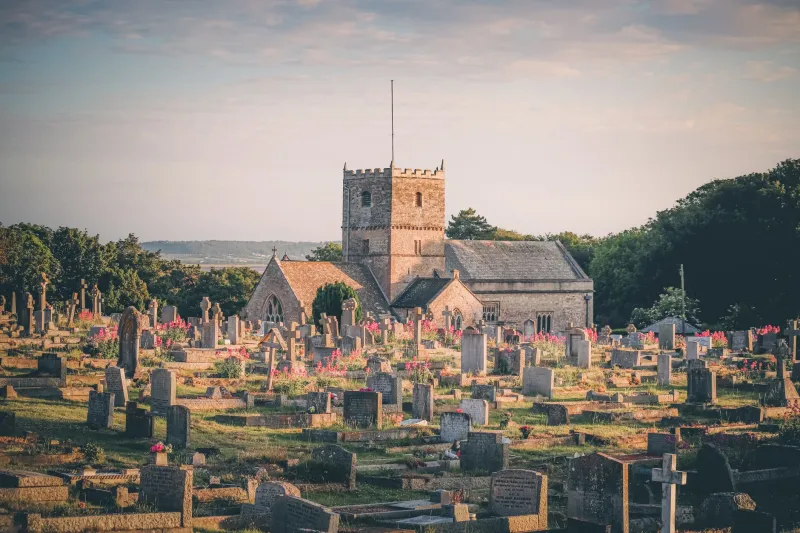
From the cathedral, head for the High Level Bridge and walk over to Gateshead. St Mary’s Heritage Centre, in the old church at Oakwellgate, is a good halfway house: part churchyard, part community space, part reminder that Gateshead’s story is not a footnote to Newcastle’s. The churchyard here has the uneven, leaning stones that make you adjust your pace. Look for the parish memorial and the older family plots nearby. Some names will be familiar from streets and buildings on the Gateshead side. That is the point. These are local names before they are national names.
Volunteers and heritage groups care for this kind of site in practical ways: cutting back ivy, recording inscriptions, re-lettering worn stone, and keeping the path safe without tidying away the atmosphere. If you visit, treat the stones as you would a photograph album. Do not move them, do not lean on them, and ask before you take close-up pictures of graves.
A short Metro hop to Heworth
From Gateshead, take the Metro to Heworth and walk to St Mary’s Church. The churchyard here gives you a different register of remembrance. Alongside family graves and parish memorials, you may find the neat, uniform headstones of Commonwealth War Graves Commission burials. They are cared for with real discipline, but they sit among ordinary local graves, which is exactly as it should be. A war grave is not a separate species of loss. It is a family grave with a wider story attached.
Look for the ages. Look for the home addresses where they are given. Look for the same surnames appearing more than once. The military history is there, but the local history is louder: streets, workplaces, schools, churches, families who stayed in the same few square miles for generations.
What the congregations do between Novembers
The poppy crosses are gathered up. The wreaths are composted or stored. Then the less visible work begins. Parishes record inscriptions before they fade. Volunteers clean lettering with the right brushes and the wrong ones left in the shed. Friends groups raise money for conservation. Churches open their doors for school visits, local history groups and quiet days. Someone checks the memorial garden. Someone else makes sure the path is not slippery.
This care is not nostalgia. It is a form of hospitality. A churchyard that is looked after says to a stranger: you are allowed to stop here. You do not need to be a member of the congregation. You do not need to know the words. You can simply read a name and wonder about the life behind it.
A gentle route for the days around 11 November
Allow two hours, plus travel. Start at St John the Baptist, Grainger Street, then walk to St Nicholas Cathedral. Cross the High Level Bridge to St Mary’s Heritage Centre in Gateshead. Take the Metro to Heworth for St Mary’s Church. If you have a car or more time, add All Saints, Gosforth, where the churchyard and memorials offer another local variation on the same theme.
Go on a weekday if you can. Take a notebook. Read one name aloud. Leave the poppies where they are. End with a few minutes of silence, not because silence solves anything, but because it makes room for the names to land.
The Last Post will sound in services across Tyneside. Then the buglers will lower their instruments, the crowds will disperse, and the churchyards will go quiet again. That quiet is not empty. It is full of local names, kept in stone and in the careful hands of people who still believe that remembering is a neighbourly act.