Glue, Grace and a Three-Legged Donkey: The Tyneside Workshop Getting Cribs Ready for Advent
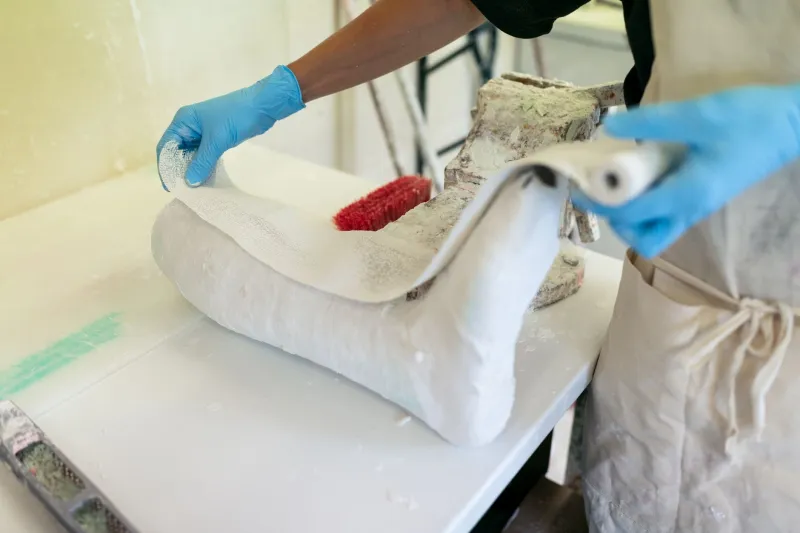
On a Tuesday night in November, the church hall in Heaton smells of PVA glue, old newspaper and the faint ghost of a hundred tea breaks. A trestle table has been pushed against the radiator, and on it lies a small, sorry parade: a donkey with one leg shorter than the other, an angel whose halo has come away in the night, and a sheep so smooth from handling that it looks less like wool and more like a pebble.
This is the crib repair bench — though nobody here calls it that. They call it 'the table', as in: 'Put that one on the table, love, we'll see to it after.' For three evenings each November, a handful of volunteers from parishes across Tyneside gather to patch up the battered nativity figures that spend the other eleven months in cardboard boxes and cupboards under stairs. They are not craftspeople, particularly. They are people who noticed that the angel's wing was wobbling and decided to do something about it.
A Bench Full of Small Rescues
The work is mostly glue. Wood glue, superglue, a hot glue gun that someone brought from home and a roll of masking tape that has seen better days. There is a tin of acrylic paints in dubious shades of gold and blue, and a jam jar of mismatched brushes. On the floor, a box marked 'Spares' holds a legless shepherd, two sheep of unknown origin and what might be a camel's hump.
'You'd be surprised what comes through the door,' says Pauline, a retired teacher who has been part of the bench for six years. 'Last year someone brought in a Jesus that had lost his head. We found it in the bottom of the box. It had been rolling around in there since 1998.' She laughs. 'He's fine now. A bit of a scar on his neck, but fine.'
The volunteers work slowly. They are not trying to restore the figures to showroom condition. They are trying to make them last another year. A chipped nose is left alone if it is not sharp. A faded robe gets a light touch-up only where the plaster has gone white. 'You don't want to erase the history,' says another volunteer, Brian, who is carefully reattaching a halo with a cocktail stick and a bead of glue. 'These figures have been handled by children who are now grandparents. That's part of the crib now.'
What the Chips and Cracks Remember
Every figure, it turns out, has a story. There is the sheep that went missing from a crib in Byker for three years and turned up in a box of tinsel. There is the donkey whose leg was broken during a particularly enthusiastic primary school assembly and mended with a lolly stick and hope. There is the angel whose halo was held on with Blu Tack for so long that the Blu Tack had become part of the plaster.
'People think it's just about the objects,' says Pauline. 'But it's not. It's about what the objects carry. A family loses someone, and suddenly the crib they put up every year matters more than it did before. They bring it in because they want it to be looked after. They want someone to say: yes, this is worth mending.'
The bench is not a formal service. Nobody advertises it. Word travels through parish newsletters, church halls and the kind of quiet conversation that happens over a cup of tea after Mass. Someone knows someone who has a shed full of tools. Someone else has a steady hand with a paintbrush. The whole thing runs on donated time, donated glue and the shared conviction that a broken crib is not rubbish.
Why a Broken Sheep Still Belongs
There is a theology in all this, though nobody at the table would put it quite so grandly. The incarnation — the claim that God became flesh and bone and lived among us — is a claim about vulnerability. It is the opposite of a perfect, untouched display. It is a story about a baby born in a borrowed room, laid in a feeding trough, welcomed by shepherds and animals and strangers.
A crib that has been repaired is a small parable of that. It says that chipped things can still hold meaning. It says that the missing sheep can come back. It says that the angel with the wobbling halo is not less holy for being held together with glue. In a parish context, that is not just a nice idea. It is the everyday reality of church life: people patching things up, sharing what they have, making room for the scruffy and the second-hand.
'We had a family bring in a whole set last year,' Brian remembers. 'It was in a bin bag. They said they were going to throw it out because it was falling apart. We kept it. It's in the hall now, all mended. They came to the crib service and saw it there. The mum cried. Not because it was beautiful, but because it was theirs again.'
If Your Own Crib Has Seen Better Days
The volunteers are clear about one thing: don't bin your old set in January just because it looks tired. Most damage is fixable. A clean break in plaster or resin can be glued with a good water-based adhesive and left overnight. Missing pieces can sometimes be matched from a spares box — check with your local parish or craft group. Faded paint can be touched up with acrylics, testing on a hidden patch first. If a figure is beyond repair, keep it anyway. The crib is not a museum piece; it is a household ritual.
And if you are not sure where to start, ask. The bench in Heaton is not the only one. Across Tyneside, in church halls and community centres, there are people who know their way around a broken shepherd. They will not judge your dusty box or your missing sheep. They will just put the kettle on and reach for the glue.
The Night the Angel Goes Back in the Box
By the end of the evening, the angel is upright again, halo fixed. The donkey has a new leg, slightly the wrong colour, but the children will not mind. The sheep has been given a coat of matte varnish and looks less like a pebble. The box marked 'Spares' is a little emptier. The volunteers stack the figures carefully in newspaper and put the lid on.
In a few weeks, these figures will be arranged in churches and homes across Newcastle and beyond. They will be lit by fairy lights and surrounded by tinsel. Someone will knock the angel over during the carol service. A toddler will make off with a sheep. And next November, the bench will be back, ready to mend what can be mended. It is quiet work. It is holy work. And it is, in its own small way, exactly what Advent is for.