Sponges, Silver Foil and Small Change: A Friday Night at a Tyneside Christmas Fair
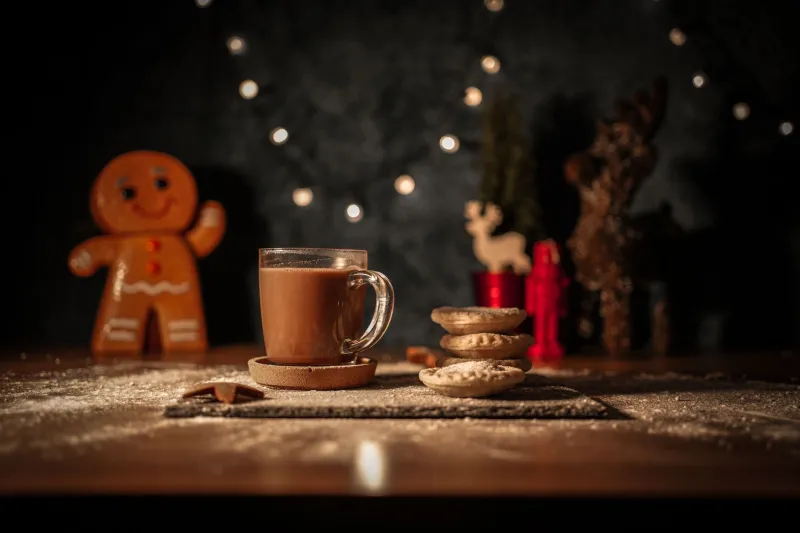
The hall smells of Mr Sheen, old radiators and vanilla. It is 7.12pm on a Friday in November, and somewhere between Fenham and Heaton a church Christmas fair is being assembled by people who have already done a full day’s work. Folding tables go up with the solemnity of altar preparations. A box marked ‘DO NOT SHAKE — CAKES’ is carried in as if it contains something sacramental. Which, in a way, it does.
Outside, the 2026 Christmas lights are going up on the high street and the Metro is doing its usual Friday-night shrug. Inside, the cake stall is taking shape: Victoria sponges wrapped in silver foil, gingerbread in star shapes, a traybake that has been cut with a ruler and the steady eye of a retired dinner lady. Nothing here costs more than a few pounds. Everything here costs something else as well.
The Friday Night Shift
Margaret is 74 and has run this stall for longer than she cares to admit. She has a clipboard, a biro on a string and a system. ‘Whole cakes at the back, slices at the front, gluten-free on the blue cloth so nobody has to ask,’ she says. ‘And don’t put the iced ones next to the warm radiator. We’re not running a soup kitchen.’
Around her, a small crew is unpacking. There is Sam, the youth worker, who has been persuaded to wear a Santa hat and is pretending not to enjoy it. There is a man called Dave who appears to have brought six dozen mince pies and will not be drawn on why. There is a teenager on labelling duty, writing ‘contains nuts’ in handwriting that suggests she has a future in medicine or ransom notes.
The prices are handwritten on card: Victoria sponge, £2 a slice. Whole cake, £8. Traybake, 50p. Gingerbread stars, three for £1. A fruitcake that looks like it could anchor a small boat, £5. Someone has drawn a holly leaf in the corner. It is not professional. It is better than professional.
How Do You Price a Victoria Sponge?
The cake stall is where the economics of a Tyneside church hall become gently visible. In a supermarket, £2 buys you a slice of something wrapped in plastic and made in a factory the size of a retail park. Here, £2 buys you eggs that someone’s neighbour’s hens laid, jam from a jar that has been in a cupboard since the summer, and the forty minutes Margaret spent wondering whether the oven was running hot again.
‘You don’t price it to make a profit,’ she says. ‘You price it so people can buy it. If you price it too high, it’s not a fair anymore. It’s a shop.’
That distinction matters. The ingredients are often donated — a bag of flour here, a block of butter there, a tin of raspberries that someone bought by mistake. The marzipan is its own small mystery. Every year, someone provides it. Every year, nobody is entirely sure who. There is a rumour it comes from a woman in Gosforth who buys it in bulk in October and leaves it in the church porch with a note that says ‘For the cakes. No fuss.’
‘It’s usually someone who’s had a hard year and wants to be useful,’ says Sam, adjusting his Santa hat. ‘They don’t want a plaque. They want the marzipan to be used.’
The Labels Tell Their Own Story
By 8pm, the labelling has become a small theological exercise. ‘Gluten-free’ is written in capitals. ‘Vegan’ has a star next to it. ‘May contain traces of nuts’ appears on a Bakewell tart with the kind of caution usually reserved for fireworks. A child has added ‘yum’ to one label in glitter pen. The stall is not just selling cake; it is trying to make sure everyone can take something home.
That is the quiet work of a church fair in 2026. The hall is not full of people who agree on everything. It is full of people who have learned to ask the right questions: Is there dairy in that? Can I put one by for Joan? Did anyone remember the change tin? The cake stall is a small common language.
The Raffle Ticket as a Small Creed
On Saturday morning, the doors open at 10. The first surge is always the same: children heading for the tombola, grandparents heading for the cake stall, and a man in a Newcastle United scarf heading for the raffle with the focus of someone who has done this before.
The raffle tickets are 50p a strip. The prizes are stacked on a table near the stage: a hamper, a bath set, a bottle of something red, a voucher from a local café, a teddy bear that has seen things. Nobody is really buying a ticket for the bath set. They are buying a small, inexpensive way of saying: I am here. I belong to this. Count me in.
A boy of about six buys one strip with his own money, carefully counted out in coins. He does not win. He does not seem to mind. He is given a biscuit anyway. The ledger has many columns.
The Last Slice
By 2pm, the cake stall is down to crumbs and a half-eaten fruitcake that has been kindly described as ‘substantial’. Margaret is counting takings in a back room with two others. The total will not change the world. It might fix a leaking gutter, fund a food-bank delivery, pay for the youth group’s minibus. It might just keep the lights on for another winter.
But the cake stall is not only about the money. It is about the £2 that is also a gift. The slice that is also a welcome. The raffle ticket that is also a tiny creed: I am part of this place, even if I only turn up once a year.
As the tables are folded away for another twelve months, Margaret puts the clipboard in her bag and looks at the empty hall. ‘Same time next year,’ she says. ‘And tell them we need more marzipan.’
On a Tyneside Saturday, that is not just a request. It is a small act of faith.